Whether you live in the Netherlands or in Belgium, the problems of loneliness are the same. Whether you speak Dutch, Flemish, or French, the solution lies within yourself…
Data from the Netherlands
Loneliness has been measured seriously in the Netherlands for a number of years, since the 1980s. This research is often focused on the lives of the elderly. However, the entire population has also been mapped through research primarily by the regional Municipal Health Services (GGDs). Since 2012, there has been the Health Monitor, a study through which the GGD maps various aspects of our population’s health, including loneliness.
To measure the level of loneliness among the Dutch population, the ‘Loneliness Scale'[1] is used. In addition, research is occasionally conducted by local organizations. The Netherlands also participates in an international project to measure loneliness among the elderly population, so data is also derived from that source. For instance, there is a wealth of data from which the National Institute for Public Health and the Environment (RIVM) concluded in 2016 that almost forty percent of adult Dutch people, of all ages, feel lonely.
Figures from the Netherlands
This website of the Dutch government, created by the RIVM: www.volksgezondheidenzorg.info, contains a wealth of data with a beautiful presentation of figures regarding loneliness, broken down to the district and neighborhood level. These figures are not entirely 100% certain, as some estimates were used. However, those estimates were made using a reliable method. For more information and accountability, please visit the website.[2] Here you can see an example of such a page.
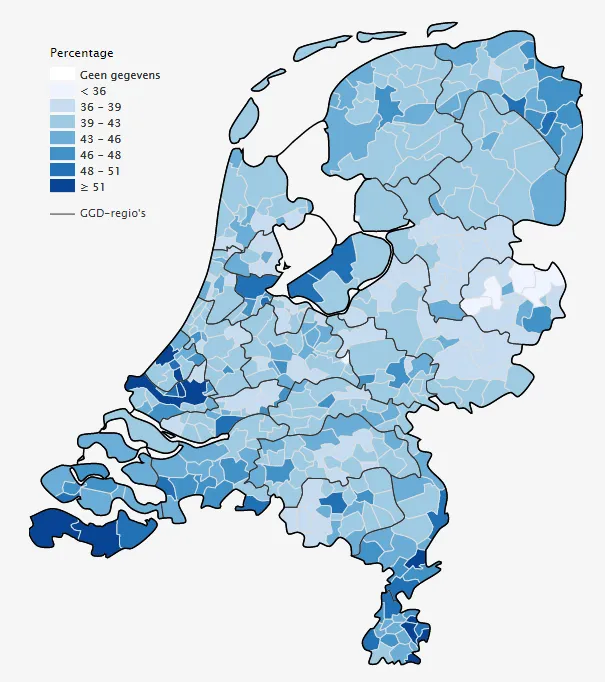
In Halderberge, the municipality where I live, loneliness hovers around forty percent. When it comes to severe loneliness, Halderberge comes in at 8%. Therefore, according to the 2016 measurements, there are 2,500 people in this municipality who feel very lonely every day.
National figures from the Netherlands show that approximately 40% of the population feels lonely too often by their own account, and that, generally speaking, 10% feel very lonely.
Figures from Belgium
In Belgium, a study was conducted in 2018 under the leadership of Professor Lieven Annemans, the National Happiness Survey, which resulted in a report on social relationships.[4] This shows that almost half of all Belgians (46%) feel lonely, with the age group between 35 and 50 being the most represented.
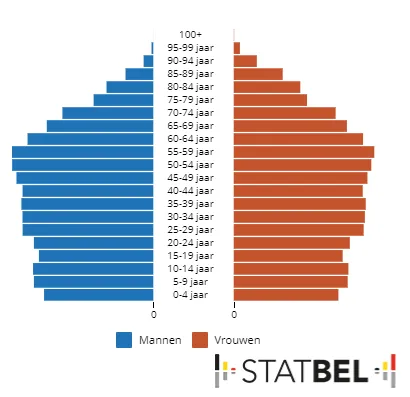
The image below comes from Statbel[1], the organization that keeps track of all population data in Belgium. This age pyramid was published on their website in 2020. Here too, it can be seen that there are many more people in the age group below seventy-five than above.
Source of this article: https://eenzaamheid.info/nederland-of-belgie/?gad_source=1&gad_campaignid=16897683971&gbraid=0AAAAAoiqwfQyy0T3ZC3kwwK_V5w_YkUQ_&gclid=CjwKCAjwwNbEBhBpEiwAFYLtGKvTZUlLas-s3gzeoh0Dw3eunGvdsaVEuXi7ppmdGPyxMLU3uXKXlxoCztkQAvD_BwE
Share this article:
Read also